

Iran is a country I covered in detail in the past, so I will not repeat too much of what takes too long to cover regarding background information.
For reference, see the 2022 pieces “The Perse-istant Empire” part 1 and part 2; as well as “Iran news - the Eurasian connection - Return of an empire?“, 2023 “Israel - Iran Update“ and 2024 “The Coming War With Iran“.
Make no mistake, this is part of what will be categorized by historians as WW3, a topic I discussed here.
And a war that will coalesce with the Ukrainian front by involving Turkey, potentially with Erdogan pushed out of the way if he resists.
Now let’s dwell on the specifics of two topics:
Prediction for the upcoming long war with Iran.
The direct investing consequences of the closing of the Strait of Hormuz and destruction of the Middle East hydrocarbon facilities.
Iran At War
The War So Far
Iran has surprised most observers by performing as I predicted years ago.
The country had 2 decades to prepare exactly for THIS war, focused on negating the two superpowers of the USA and Israel: air power and soft power / infiltration / subversion.
For the rest of the article, I will refer to it mostly as Isramerica, as it is clear to anyone honestly looking at it that the two nations are now entirely merged in their objective and leadership.
The first part about air power is now obvious. If you put your air defense and missiles + drone stockpiles in bunkers under 100+ meters of rock, you can handle a lot of bombing with little military effect.
You can even poke out the launcher, fire, and go back to safety.
Hence why Isramerica is already bombing softer targets, hoping to break the 90-million people nation resolve: schools, hospitals, oil storage around Tehran, high-ranking officials’ homes, etc.
The second part about infiltration was seemingly Iran’s greatest weakness, and the pager episode in Lebanon, or deep infiltration in the previous episode of that war, had made me wonder if Iran would collapse suddenly from infiltration inside the state capacity and an intelligence failure.
However, a few poorly timed actions depleted this weapon, likely to never be seen again in signficant importance in this conflict:
Repeated assassination of diplomats and leaders for months and years, again and again, showing the pointlessness of negotiations and the risks of any security vulnerability.
The reinforcement of hardliners’ positions by assassinating Khomeini (who was opposed to nuclear weapons), backing out of military crippling deals (JCPOA), and relentless hostility. Any leader advocating for compromise was sidelined by the pointlessness of this position.
A tentative color revolution WEEKS AHEAD of the bombing, a truly puzzling timing choice, with too little popular support, too late into the Gaza genocide, that allowed the Iranian internal security to identify and remove most infiltrators, including many clandestine suicide drone factories.
This also used Starlink, which Russia has learned to locate and turn into a target-rich beacon, a tech I am sure Iran benefited from.
After these first weeks, any destabilization will fail, because the Iranian people are understandably outraged at the targeting of schools and hospitals, or poisoning of millions of civilians with toxic oil fumes blotting Tehran’s skies.
So even the people who disliked the mullahs intensely will not betray their country and look to become the next ISIS-led Syria instead.
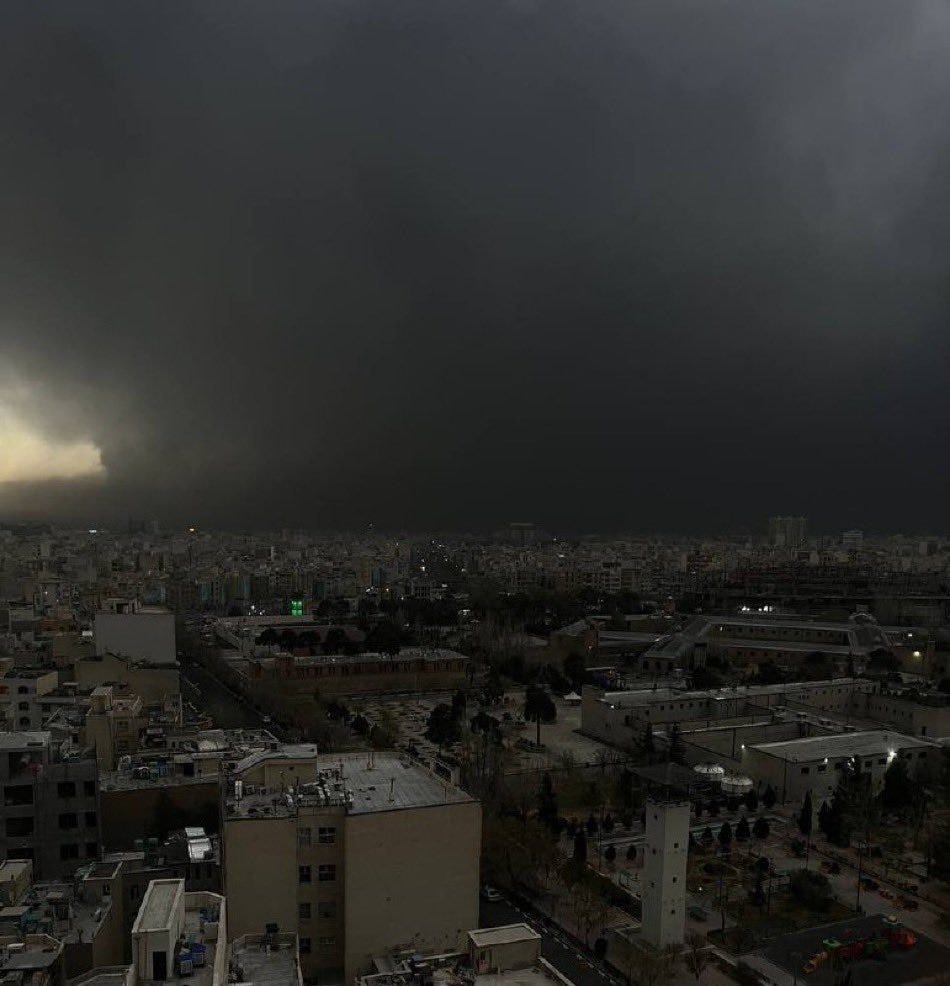
Iran might not be able to bomb NY or submarines in repair in Virginia, but it can force the US out of Iran’s vicinity, although at a steep price for itself.
Iran’s win conditions is to win locally, while the US can lose by just failing to project power close to Iran and in the Hormuz Strait.
As such, this leaves Iran with the strategic initiative.
Let’s resume the situation briefly:
The Strait of Hormuz is closed for everyone BUT Iranian oil, which has to be paid for in Yuan, a big win against the petrodollar (protection versus boost in dollar demand).
$5,000-$10,000 drones are being intercepted by $1M missiles produced AT BEST in the 200-300 units PER YEAR. Probably that many are used PER WEEK.
The US still does not have air dominance over Iran, and that’s without Russia replenishing the country’s air defense yet. Or China.
Almost none of the underground bases East of Iran, nor its most advanced missiles, have yet been used, nor any of its thousands of suicide speed boats and underwater drones.
Every US military base is a target; many have already been turned to rubble.
As US air bases are getting hammered, long-range strikes with Stratotankers following the bombers for refueling mid-air are needed, with one Stratotanker downed over Iraq, another hit, and 5 destroyed on the tarmac (although the US has 300-400 of these).
The Gulf states’ reputation as a fun and rich luxury destination, or a safe financial and airport hub, is forever destroyed.
Many oil facilities in the Gulf have been bombed, with severe damages and the rest at the mercy of Iran, which, for now, has chosen restraint as IT can still export oil, so is happy to see production stay intact for everyone.
15-20 million barrels per day are missing in global markets, with oil & gas fields closing, guaranteeing massive economic pain for months if not years, even with no further damage.
Israel is getting hammered, and the Iron Dome is gone, even if the damages are hard to evaluate due to heavy censorship.
Many expect Trump to “TACO” (Trump Always Chickens Out) out of complacency and a misreading of the situation.
This will not happen because Iran might not have started the war, but has stated its own war goals very clearly:
full compensation for all damages.
+ removal of all US bases from the region.
As a “fun” alternative, short of full compensation, Iran has stated it will actively look to inflict as much damage as it received as “compensation”.
A situation that memes resume far better than a longer discussion:
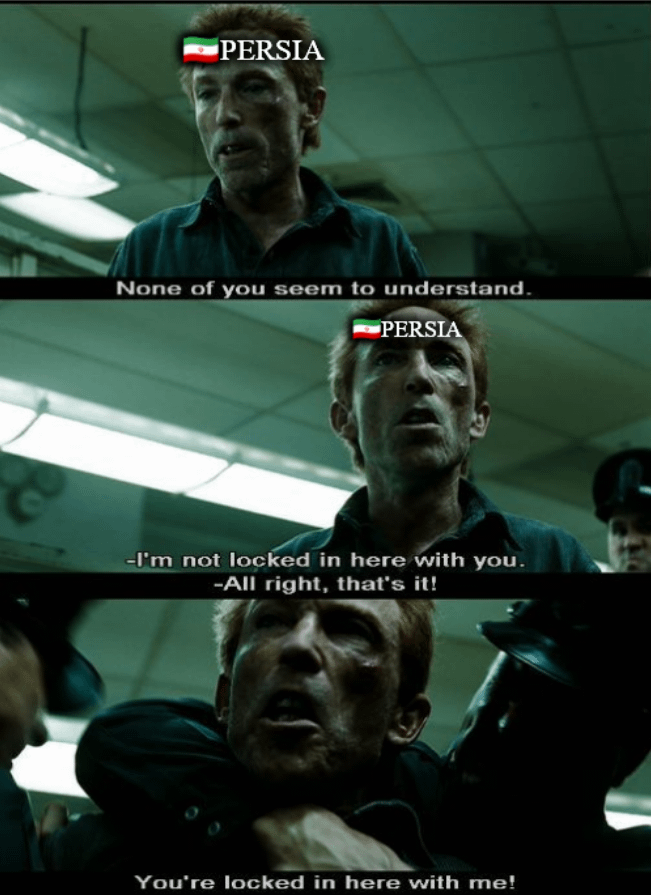

The reason for this relatively maximalist position is that Iran already tried appeasement after the 12-day war: mostly fake mutual strikes for everyone to save face, a pretense of a deal, and continuous negotiations.
The negotiations ended with the religiously-motivated martyrdom of a 90+ year old Khamenei in a sneak surprise attack WHILE NEGOCIATING (a tactic now used TWICE), a man sick with prostate cancer and likely to die soon, and seemingly welcoming his death to galvanize the country against its enemies.
But many of his relatives were also killed (including a toddler), so the newly elected leader, a new Khamenei (one of old Khamenei’s sons and an Iraq war veteran), will likely not be very peace inclined and want vengence for his family, at the very least until true deterrence and impossibility for the US to launch a similar strike ever again.
Iran’s Winning
Because of the hapless execution of the military action, ignoring the actual generals or admirals who saw it coming for the likes of Jared Kushner + the rather flawless assessment of the military possibilities by the Iranian military, the trajectory is clear.
Isramerica’s interceptors are depleted and cannot be restocked in significant numbers due to production constraints.
The only alternative is a land war, but so far, the Israeli invasion of Lebanon is already stalling, and attacking 90 million people in a mountainous desert region is a logistical nightmare, especially when the only supply line runs through vulnerable waters or hostile & full of Shia militias Iraq.
The border with Turkey is just not long enough, and Kurds are unwilling to help after being betrayed merely a few weeks ago, and left to the mercy of ISIS in Syria.
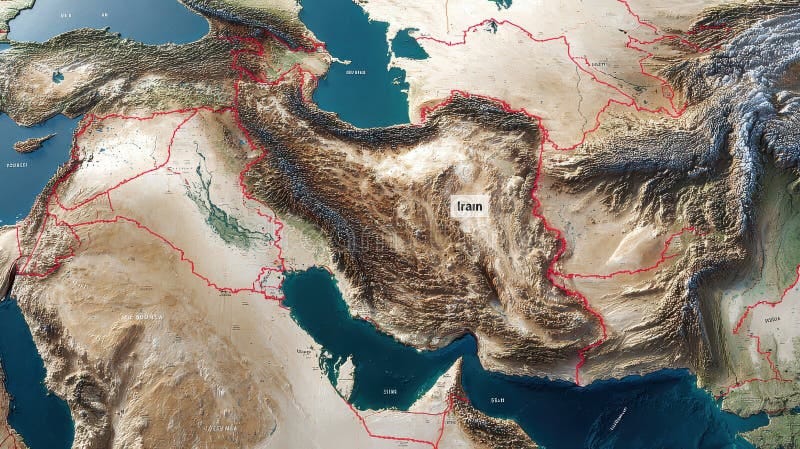
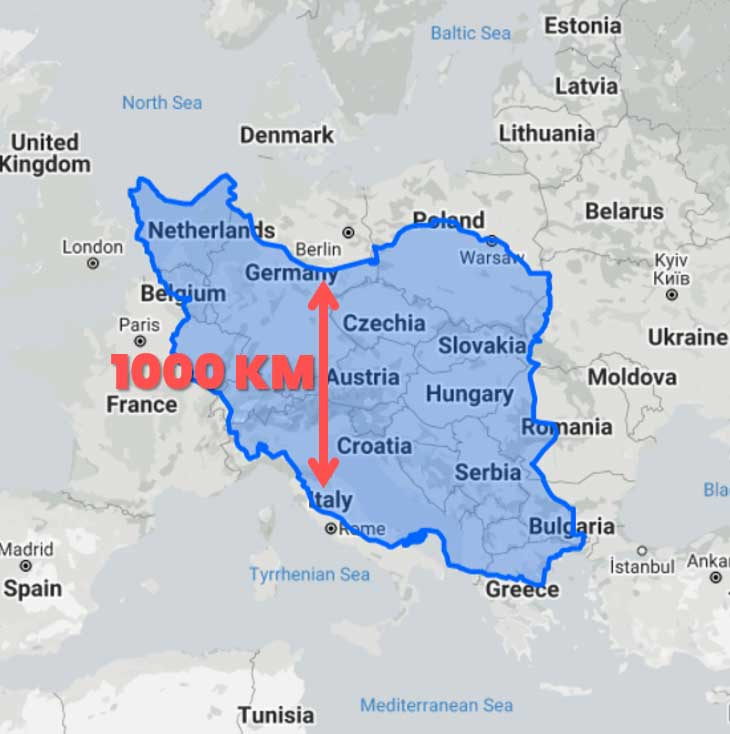
As a reminder, Iran is HUGE on top of a very hostile terrain. It will make the flat, hard soils of Iraq, perfect for the overweight Abrams tanks, look like a promenade in the park.
We are also talking of an old and capable civilization that has domestic production of advanced gas turbines, a domestic independent automotive industry, its own medical equipment manufacturing, the most advanced space program of the Middle East, massive mineral resources, a fully domestic military industrial complex, etc.
All this despite (or maybe thanks to?) decades of sanctions that crippled the country’s economy.
So primitive and divided Afghanistan will also be a walk in the park for any invader compared to Iran.
There is a reason Iran has only ever been conquered by a one-of-a-kind general, namely Alexander the Great, or ultra-mobile, brutal, & hardened forces (Caliphate Arabs, Mongols).
Actually, considering the historical precedent, the defeat of an invading force in Iran is the norm, not the exception. Not the Roman Empire, nor the Byzantine Empire, nor Russia have ever managed.
Only periods of extremely poor leadership (Darius III) or uniquely skilled nomadic armies have broken this rule.
In that respect, Iran is very much like Russia. A force you might defeat abroad with relative ease, with poor soft power and power projection abilities, but almost unbeatable at home.
And this is BEFORE Iran receives any help from Russia, which now manufactures at least 5,000 upgraded Shahed drones (“Geran”) PER MONTH.
What happens if Iran receives 1,000 of these per month? That’s a lot of Dubai luxury hotels, Saudi military bases and Israeli critical infrastructure to hit every month…
Surely, Russia will see to it that Iran “have a right to defend itself from illegal aggression” as an ironic payback to NATO after 5 years of SMO in Ukraine.
Or what happens if China decides to further help with parts, machine tools, chemicals, and electronics in a repeat of the US support of the UK in WW2? I doubt Iran will struggle to source rare earths, tungsten, or advanced parts, which is more than the US military industrial complex can say…
At this point, the USA has 2 options:
Admit defeat and find an acceptable deal, likely retreating out of the Middle East, which would be the best outcome for America as a nation and the American people.
Double down and plan a land invasion, with no Hormuz Strait opening before AT LEAST 2 years, in the unlikely case of a US victory (likely involving nuclear bombs).
This would be the options for the USA, with one vastly superior albeit unpleasant.
But Isramerica has no choice but to fight, as Israel cannot survive a dominant Iran that subdues the Gulf states and kicks America out.
So the fight will go to its military conclusion, escalating MUCH FURTHER than 99% of analysts realize. If the Saudi and Emirati oil fields are not burning in 6-12 months, I will be genuinely pleasantly surprised.
(note: before I managed to finish writing this, it seems that it already started…)
Investing Takeways
The Macro Context: 1970s Redux On Steroids
The obvious investing takeaway is that we will all be reliving the 1970s, with less hippies or classic rock and more stagflation, stagnant or declining stock markets, and brutal energy shocks.
In this environment, the only things that worked were, in order of profits: gold & silver, oil stocks, commodities, real assets like land, forest, and, to some extent, real estate (although not commercial).
Frankly, just moving into these for the next 10 years is probably the best strategy, and not much would need to be said from there.
HOWEVER, the endpoint of the 1970s 2.0 will be different. At the time, the West and the US were thriving, an engineer-rich society with low debt levels.
France built so many nuclear power plants that it made its today 70% of electricity from nuclear power from this era.
The US embraced new technology, boosted domestic oil output, and overall rebounded. It was also the most powerful military on Earth, very far from a nation struggling to subdue Iran, even if it did fail in Vietnam.
By the way, the USA never controlled more than half of Vietnam, and needed 500,000 troops to do so… Let’s just compare both countries’ maps:
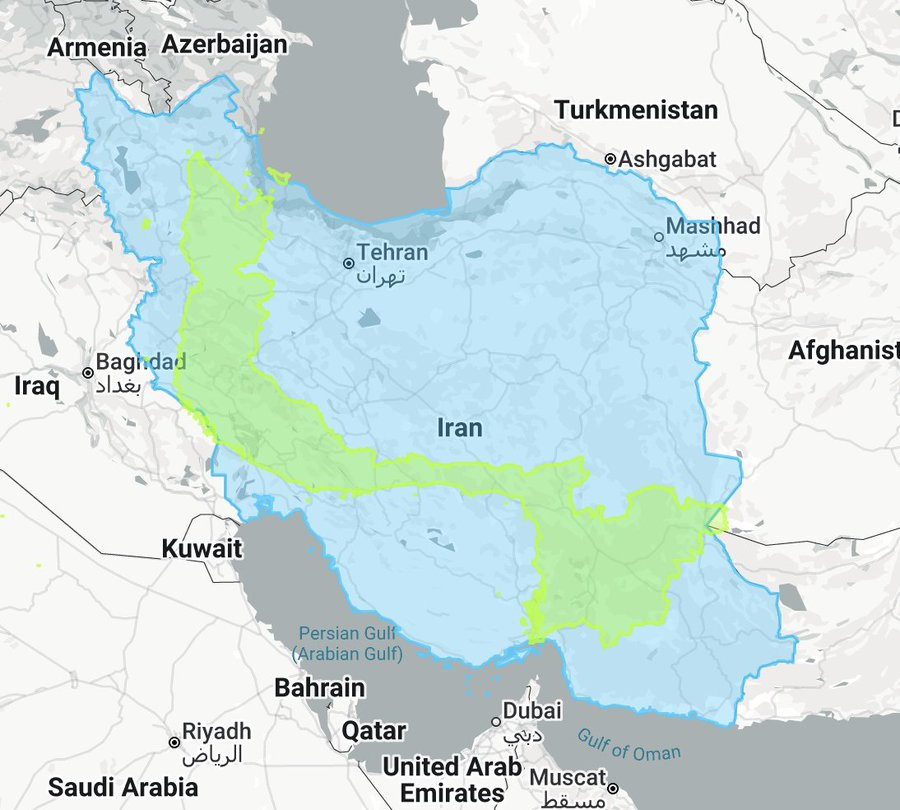
The 1970s stagflation was stopped by MASSIVE interest rate hikes that stabilized the currency and established the petrodollar as an alternative to gold.
The US's main rival was a decaying, increasingly dysfunctional communist regime unable to feed its own people.
Today Western nations are divided by immigration and politics, all above 100% of debt-to-GDP ratio, and with barely any industrial output left, they are not the same.
It is simply impossible to pull a Volker and raise the interest rates to kill inflation to reboot the system. High debt levels cannot authorize it. So the endgame is necessarily some form of currency destruction, which makes gold or productive land (farmland, forest) even more attractive.
Oil, But From Where?
Of course, if we lose 20 mmpd of oil, and 20-30% of LNG production suddenly, oil & gas producers should do well.
However, I am skeptical of any US oil companies. Trump will simply not let domestic prices run wild, and his blatant disrepect to US allies will not encourage him to provide them the energy they need at the expanse of what’s left of his political capital. Instead, pillaging the collapsing industries and human capital of Europe, Japan, and Taiwan will be “good deal” for America.
This leaves us with South America, but probably not Colombia, which might be caught in imagined or real “war on cartels” spreading from Venezuela and Mexico.
Probably the best option is the somewhat dull but still remarkably cheap Petrobras. Expect plenty of windfall taxes and forced low local fuel prices, but any export will be fully priced and EXTREMELY profitable which will compensate.
And this is a company that booked a lot of ultra-deep drilling when it was abundant and cheap, so it will be able to grow production throughout the years-long coming energy crisis.
Transocean, now merging with Valaris, might also see its time to shine, although I have had no time yet to check how many of Valaris jack-up are stuck in the Persian Gulf, a quick AI search telling me “too many”.
Chemicals
Any country short on feedstock (gas, naphta, etc.) will have to curtail production of key chemicals.
The chemical products most affected will be the energy intensive, relatively cheap products straight from hydrocarbons: PVC, pipes, paint, roofing material, solvants, plastic for packaging or isolation, etc.
On the flip side, petrochemical plants WITH feedstock will be able to make crazy margins in what is normally a boring low margin cyclical sector. The sector was close to a bottom, so valuations are rather still cheap, even after the recent pre-war rebound.
So we are looking at big opportunities for companies making chemicals from coal or locally cheap gas.
Companies I have seen discussed on this topic, but did not research yet are Sasol, Braskem, and LyondellBasell.
Fertilizers, Food
Another category is nitrogen fertilizers, as they are essentially transformed natural gas. You can technically do it with other energy sources, but with ALL energy going crazy, shortages are coming.
And already, China is blocking ALL export of fertilizers (and refined fuel products), with Russia reducing exports as well.
Here too it is tricky, as US nitrogen producers should be great (cheap shale gas), but will likely be hammered by Trump. This would exclude obvious play like Nutrien.
Yara International in Norway is maybe an option?
Another is Adecoagro, with a very surprising and to my opinion very shady 70% ownership by stablecoin provider Tether, worth its own dedicated article whenever possible.
In any case, food prices will go up, and only producers that are somehow secure in their nitrogen input will do well. Grass fed cattle can be a great deal here.
Metals
Industrial metals might suffer from contracting demand and high energy costs, but here too it will depend.
African producers will get wrecked by shortage of sulfuric acid, especially to mine copper and gold, before even factoring in food riots and general instability from food prices.
Gold and silver producers will do well if they can maintain production (again, massive sulfur shortage), as the incoming crazy money printing will definitely keep up with energy price, even without counting the already massive 100% profit of AISC costs at current gold prices.
Short?
Helium shortage is an interesting case, as most of global production came from Qatar. This is an essential product for MRI, niche applications, and more importantly semiconductor production.
China has in advance redirected 50% of its helium supply so that it comes from Russia.
However, Taiwan and therefore TSMC seems to be in a VERY bad spot, squeezed by low energy supply, potentially less stable grid (very damaging to semiconductor foundries) and no helium.
So far, TSMC seems the most obvious short to me, as well as any luxury gas guzzling toys like RVs or cruise ships.